
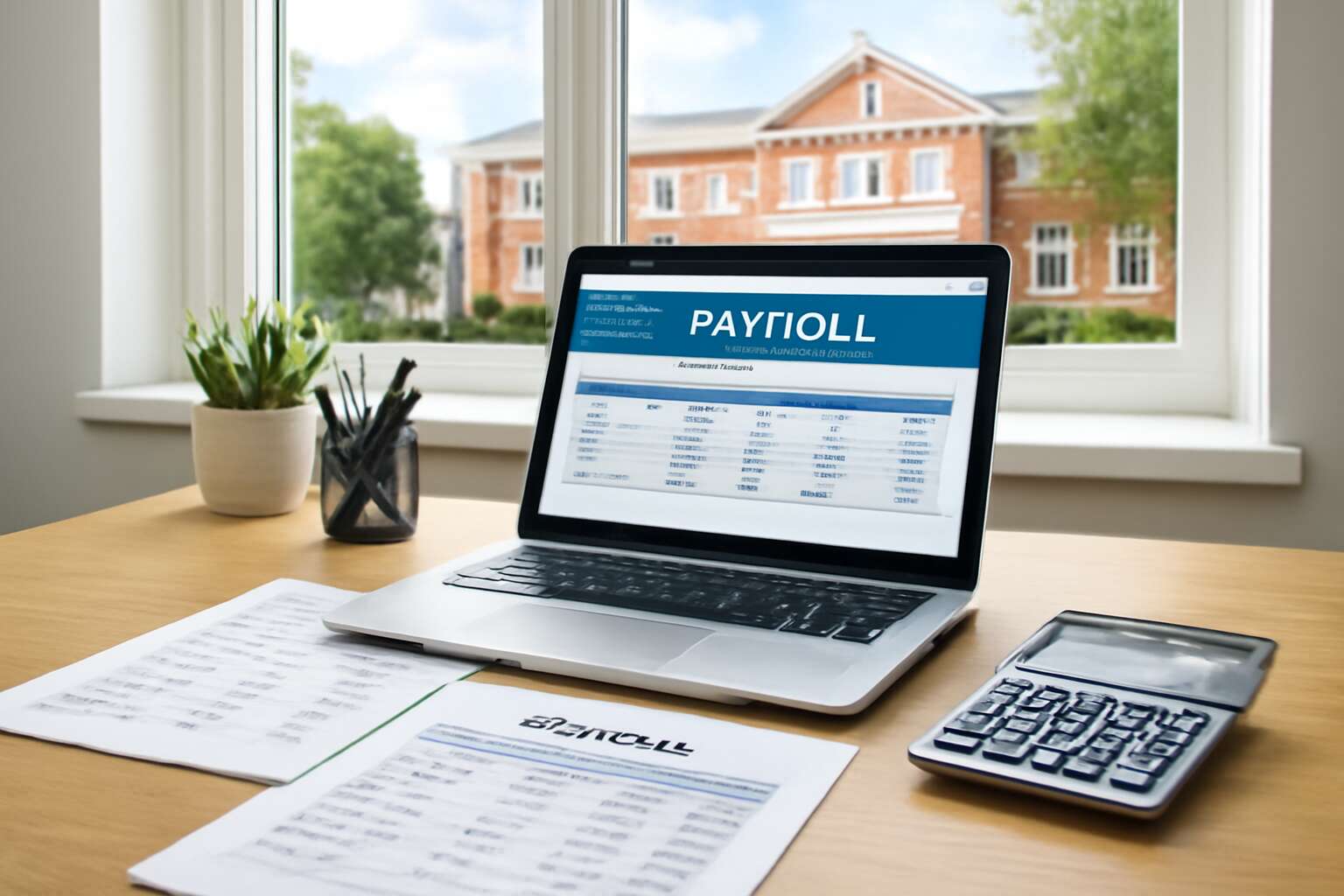
Understanding Payroll Services for the Education Sector
What payroll services include for education institutions
In the education sector, accuracy in payroll isn’t merely about numbers—it’s about timetables and trust. Payroll issues can steal a day of admin time per week in a school district. This is where trust comes to life!
Payroll services for education institutions span core processing, benefits, and statutory reporting that keep employees paid on time and records compliant. They ensure leaves, absences, and attendance feed data into HR systems, while safeguarding sensitive information with data protection standards.
- Salary processing and payslips
- Tax and statutory reporting (PAYE, UIF, SDL)
- Benefits administration and retirement contributions
- Leave and attendance tracking
- Data security and POPIA-compliant handling
Choosing a partner that understands the SA education landscape reduces risk and frees school leaders to focus on learners. We understand the landscape, and we know how payroll must flow—reliably, securely. The payroll services department of education stands as a backbone, turning complexity into clarity.
Key regulatory frameworks governing school payroll
Regulatory care isn’t abstract in education payroll; it’s the heartbeat. In the payroll services department of education, compliance is a living discipline that keeps timetables honest and trust intact. I’ve watched how rules orbit every cycle, shaping work hours and the cadence of pay.
Key frameworks guiding school payroll include:
- Basic Conditions of Employment Act (BCEA) and Labour Relations Act (LRA): rules around work hours and how changes in employment are handled
- POPIA: data protection and confidentiality
- GEPF and retirement contributions for public service employees
- Tax compliance and statutory reporting to the SA Revenue Service
When these frameworks flow through processes, payroll becomes reliable, secure, and transparent—quietly empowering educators and learners alike.
Roles and responsibilities in the education payroll office
<pAcross South Africa, a single district payroll processes thousands of educators every month, turning numbers into people who are paid on time. The payroll services department of education stands as a gatekeeper of fair compensation, data sanctity, and timeliness. I’ve watched how careful approvals and airtight records keep timetables honest and trust intact.
- Ensuring data integrity from attendance to remuneration.
- Safeguarding confidentiality and personal information at every touchpoint.
- Performing compliance checks and statutory reporting with precision.
- Timely processing and monthly payment reconciliation that educators can trust.
- Coordinating with HR, payroll, and retirement schemes smoothly.
<pRoles ripple through the school day, ensuring educators focus on learning while payroll quietly enforces accountability.
Common payroll challenges in K-12 and higher education
Every payroll cycle in South Africa’s schools is a high-stakes operation!
Understanding payroll services for the education sector means balancing complex contracts, diverse pay scales, and multiple funding streams. In K-12 and higher education, common challenges include timely payment of teaching allowances, accurate deductions, and compliance across provincial and national rules. To illustrate the landscape, consider:
- Complex teacher agreements and extra duties
- Funding alignment with grants, bursaries, and project budgets
- Audits and reporting demands from Gauteng to the Western Cape
These realities explain why the payroll services department of education seeks robust systems that track entitlements, automate updates, and protect data integrity.
Payroll Process and Compliance in Education
Payroll lifecycle in public education
Public schools in South Africa run on more glue than you’d think—the payroll clock is the heartbeat of the district. A misstep in pay can ripple through salaries, pensions, and leave balances, turning staff into grumpy patrons of the staff room. That’s why a rock-solid payroll process and compliance plan matters.
In the education payroll lifecycle, meticulous data handling, regulatory checks, and transparent reporting keep everything tidy. The workflow usually covers data capture, validation, processing, and submission, followed by audits and reconciliations. To stay compliant, teams align with South Africa’s tax and payroll frameworks and school-specific policies.
- Data integrity and validation
- Tax, UIF, SDL, and statutory compliance
- Audit trails and timely reporting
When payroll services department of education orchestrates this, schools breathe easier and staff stay paid on time. A robust lifecycle reduces errors, improves morale, and frees administrators to focus on learning rather than ledgers.
Compliance with state and federal tax rules for schools
Payroll is the heartbeat of every school—miss a beat, and the staff room feels it. A district treasurer once quipped, “Payroll isn’t numbers; it’s people.” The payroll services department of education keeps SARS rules—PAYE, UIF, SDL—and school policies aligned so pay slips land on time and pensions stay on course.
To stay compliant, the process follows a tight rhythm:
- Data accuracy and validation
- Timely tax and statutory submissions
- Clear audit trails and timely reporting
That keeps schools breathing easier; staff are paid on time and admins can focus on learning rather than ledgers. That’s the promise of payroll process and compliance in education—delivered by the payroll services department of education.
Reporting requirements and timelines for schools
“Payroll is the quiet engine of every school,” a sentiment that rings true in South Africa, where the payroll cycle binds SARS, UIF, and school policy in one seamless melody. In the payroll services department of education, every payslip lands on time and every pension pathway stays clear, even as audits hover like winter clouds. The cadence keeps teachers focused on learning, not ledgers.
To stay compliant, reporting requirements and timelines are kept with surgical precision. The rhythm typically follows:
- Monthly submissions for EMP201 and PAYE/UIF/SDL via SARS e-Filing, ensuring payments reach government accounts by due date.
- Quarterly reconciliations and annual EMP501 to reconcile data and generate IRP5s for staff.
- Audit trails, data validation, and timely reporting to boards and auditors for transparency.
We carry the human story behind every paycheck with grace—keeping schools breathing easy so learning can flourish.
Audit readiness and internal controls in education payroll
Payroll is the heartbeat of a school, and in South Africa, payroll variances can be cut by up to 40% with robust controls. In the payroll services department of education, precision isn’t optional—it’s policy, and a misstep shows up like feedback on a loud day. Audits hover, but audit readiness means clean data, clear approvals, and audit trails that behave like clockwork. A tight payroll pipeline keeps teachers paid on time and morale high.
Audit readiness and internal controls in education payroll are less about stifling and more about breathing room: segregation of duties, data validation, and reconciliations at every term end. When these elements align, the process hums, compliance shines, and the next inquiry becomes a mere formality.
Technology, Systems, and Vendors for Education Payroll
Choosing payroll software for school districts and universities
Technology is the compass guiding education payroll through shifting tides. In South Africa, cloud-based systems offer scalable security for thousands of records, while POPIA and SARS rules keep every calculation honest. For payroll services department of education across SA, the right tech turns complexity into clarity and speed.
Systems that weave HR, attendance, and leave into one trusted ledger make audits feel less like storms and more like smooth sailing. They empower schools and universities to resolve discrepancies in minutes, not days, while maintaining student and staff privacy.
- Cloud-based, scalable architecture
- POPIA-compliant data protection and role-based access
- Seamless integration with HR, attendance, and payroll data
Vendors who navigate education finance with patience and precision become partners in the journey. Look for local support, sustainable data centers, and clear training paths that turn new software into daily practice for teachers, administrators, and finance teams.
Data privacy and security in educational payroll systems
Every hour of payroll downtime costs a school thousands; technology is the compass guiding education payroll through shifting tides. Cloud-based, scalable architecture keeps records secure and accessible as enrolments shift.
Systems weave HR, attendance, and leave into one ledger, cutting chaos to clarity. POPIA-compliant protection and role-based access guard privacy, while seamless integration with HR, attendance, and payroll data shortens reconciliation time.
- Encrypted data in transit and at rest
- Audit trails and access controls
- Regular privacy reviews
Vendors who navigate education finance with patience become true partners. Local support, sustainable data centers, and clear training paths turn new software into daily practice for teachers, administrators, and finance teams. For the payroll services department of education, trusted partners ensure governance and consistency across SA schools.
Integrations with HR, finance, and student information systems
Technology in education payroll is the quiet engine behind on-time salaries and sane audits. In South Africa, a single hour of payroll downtime can cost a school thousands, a statistic that makes cloud-based, scalable platforms feel less optional and more existential.
Systems that fuse HR, attendance, and student records into a single ledger cut chaos to clarity—reducing bottlenecks and reconciliation time. For the payroll services department of education, governance, local support, and a vendor that truly understands SA’s quirks are non-negotiable.
- Unified data flows between HR, finance, and student information systems
- Encrypted data in transit and at rest with audit trails
- POPIA-compliant access controls and regular privacy reviews
That blend of technology and partnership turns new software into daily practice for teachers, administrators, and finance teams, ensuring smooth payroll cycles across SA schools.
Cloud-based vs on-premise solutions for educational payroll
Technology keeps education payroll humming under the hood. In SA, downtime isn’t just a glitch—it costs real money. Cloud-based platforms offer elastic capacity and automatic updates, turning maintenance headaches into background tasks. On-prem solutions still have their fans, but the cloud’s resilience and rapid scaling suit the irregular rhythms of school terms.
- Unified, scalable data flows that reduce bottlenecks and reconciliation time.
- Robust security with encryption, access controls, and clear audit trails.
- Local SA support and governance baked into the vendor relationship, not tacked on after go-live.
For the payroll services department of education, choosing between cloud-based and on-premise is about balancing control with resilience. Cloud wins on uptime, updates, and SA privacy compliance, while on-prem gives granular control for niche needs; many SA districts adopt hybrids to fit governance models.
Implementation best practices for education payroll platforms
“The paycheck never sleeps!” a South African education administrator likes to say. Technology keeps payroll humming when term calendars collide with holidays. For the payroll services department of education, cloud-based platforms offer elastic capacity and automatic updates, turning maintenance into background tasks and strengthening privacy compliance.
Systems behind the scenes must be resilient and coherent. A well‑designed architecture relies on modular modules, API-first integrations, and clear data lineage to keep payroll moving smoothly.
- API-first integrations that connect HR, finance, and student-information systems
- Modular modules that scale during busy terms and contract during holidays
- Clear data lineage and audit trails to speed month-end closes
Vendors in this space act as governance partners, offering local SA support, strict SLAs, and security‑by‑design. The payroll services department of education benefits from vendor partnerships that align privacy controls with regulatory expectations and audit readiness.
Cost Management, Efficiency, and Best Practices in Education Payroll
Strategies to reduce administrative costs in education payroll
In the payroll services department of education, trimming waste isn’t optional—it’s a budget lifeboat. Across South Africa, payroll drudgery and manual reconciliations sap time and money, diverting funds from classrooms. Sharper cost management means fewer overtime hours, fewer data errors, and more resources for teaching.
Efficiency is a driver, not a dream. When data flows smoothly and approvals are streamlined, admin bottlenecks vanish and payroll runs stay on time. Here are efficiency levers that fit education:
- Centralise data sources to cut duplicate entries
- Automate timekeeping, approvals, and exception handling
- Standardise pay calendars and reporting cycles
Best practices crystallize when governance meets pragmatism. Clear data standards, supplier consolidation, and ongoing process review help schools stay efficient while remaining compliant. In short, smart structure beats heroic hacks every time.
Automation and self-service portals to improve accuracy
Across South Africa’s schools, the budget hums like a drumbeat in the staff room. For the payroll services department of education, cost discipline is not optional—it’s a lifeboat when tides turn. When payroll drifts, classrooms lose hours to overtime and data errors quietly nibble at learning time.
Efficiency becomes visible through self-service portals that let staff view payslips, update details, and track approvals. Each click trims delays and raises accuracy, turning payroll from a bottleneck into a reliable rhythm.
- Real-time data validation reduces errors
- Faster, auditable approvals
- Greater transparency and staff engagement
Best practices arise where governance meets pragmatism—clear access, routine data quality checks, and ongoing process reviews keeping pace with change.
Compliance training and staff development for payroll teams
Cost discipline in South Africa’s schools is not optional; it’s the lifeboat that keeps classrooms funded when budgets tighten. Effective payroll cost management starts with training that uncovers where overtime, misclassifications, and late changes quietly inflate the bill. A well-tuned payroll services department of education can slice waste through clearer approvals, standardised data entry, and routine audits, turning every rand into value.
Efficiency comes from the spine of the system: governance, consistent data quality, and staff development. When payroll teams in education embrace targeted compliance training, they speed up processing, reduce rework, and keep payroll cycle times predictable. The payroll services department of education benefits from this disciplined efficiency.
Best practices emerge where governance meets pragmatism. Clear access, routine data quality checks, and ongoing process reviews keep pace with change and guard against drift.
- Clear access controls and role-based permissions.
- Regular data quality checks and reconciliations.
Key metrics and KPIs for payroll performance in education
Cost management in the payroll services department of education hinges on clear cost‑to‑output metrics. Track payroll cost as a share of total education spend, overtime spend, and the rate of late changes. In South Africa, school budgets tighten quickly, making disciplined cost control essential to keep classrooms funded and learners supported.
Efficiency anchors payroll timeliness and accuracy. By watching cycle time, data quality, and rework, schools see how quickly payslips land and where errors lurk. The following KPIs sharpen focus and drive steady gains.
- Payroll cycle time from start to payout (days)
- First-pass accuracy rate
- Rework rate due to data errors
- Automation adoption rate
Best practices emerge where governance meets pragmatism. Clear access, routine data quality checks, and regular process reviews guard against drift and strengthen accountability across the payroll team.



0 Comments